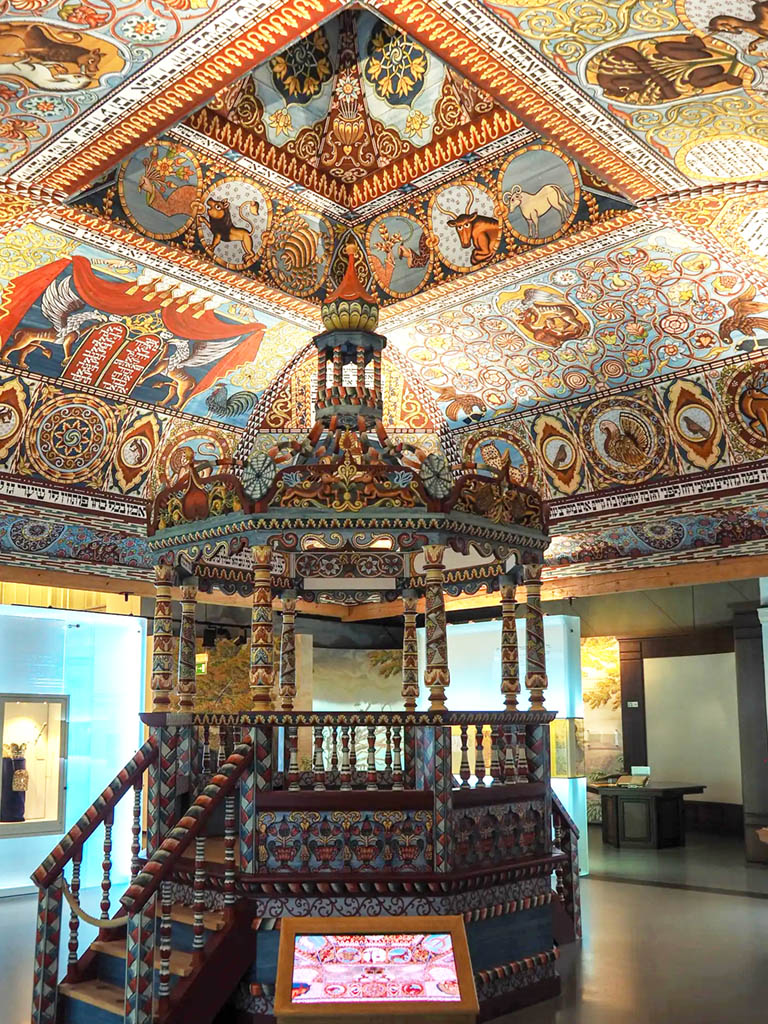
Jewish Warsaw & Poland Judaica
WHAT SHOULD YOU SEE AND WHAT'S WORTH SEEING?
A guide to Warsaw Judaica and Jewish Poland! The MEZUZA MI POLIN CENTER is also a Jewish information hub! Find out which Jewish monuments, cemeteries, and other sites of remembrance related to Jewish culture are worth visiting in Warsaw and beyond.
We’ll put together a sightseeing itinerary for you.
Did you know that before World War II, Warsaw was one of the largest centers of Jewish culture in the world?
Jewish traditions were present at every turn—from everyday life to architecture, art, and literature.
Discover the world of Polish Jews and learn about their history.
We recommend visiting the following Jewish places in Warsaw and throughout Poland!
JEWISH MUSEUMS AND INSTITUTIONS WE RECOMMEND IN Warsaw – a complete guide!
JEWISH HISTORICAL INSTITUTE
The mission of the Jewish Historical Institute is to spread knowledge about the heritage of the thousand years of Jewish presence on the Polish lands through presenting its collections as temporary and permanent expositions, organizing various kinds of artistic events, academic conferences, as well as educational and publishing activity. The most significant part of the collections is the Underground Archive of the Warsaw Ghetto, also known as the Ringelblum Archive.
Address: 3/5 Tłomackie St. Warsaw
(+48) 22 827 92 21
We reccomend: Temporary exhibitions, bookstore and TheRingelblum Archive.
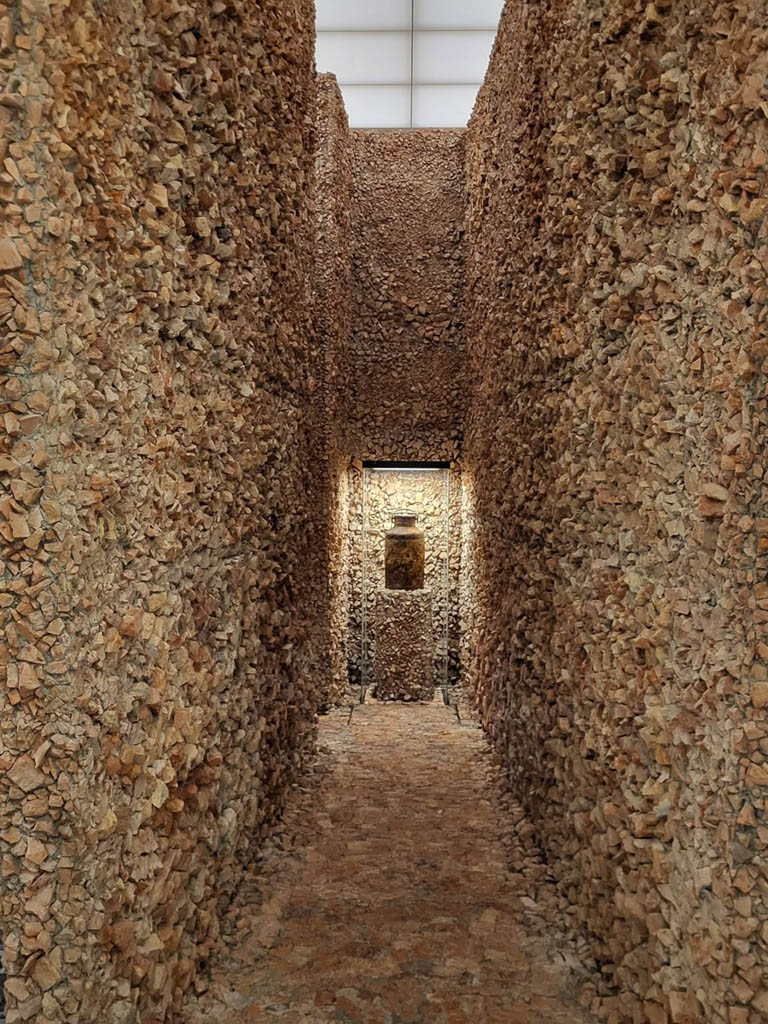
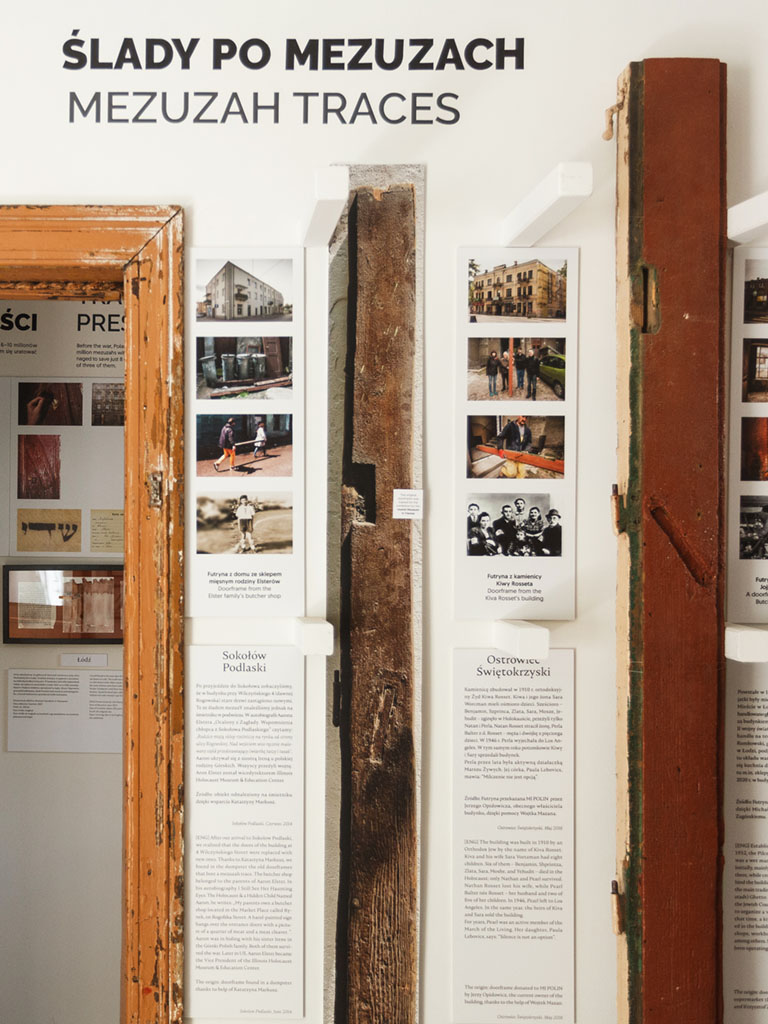
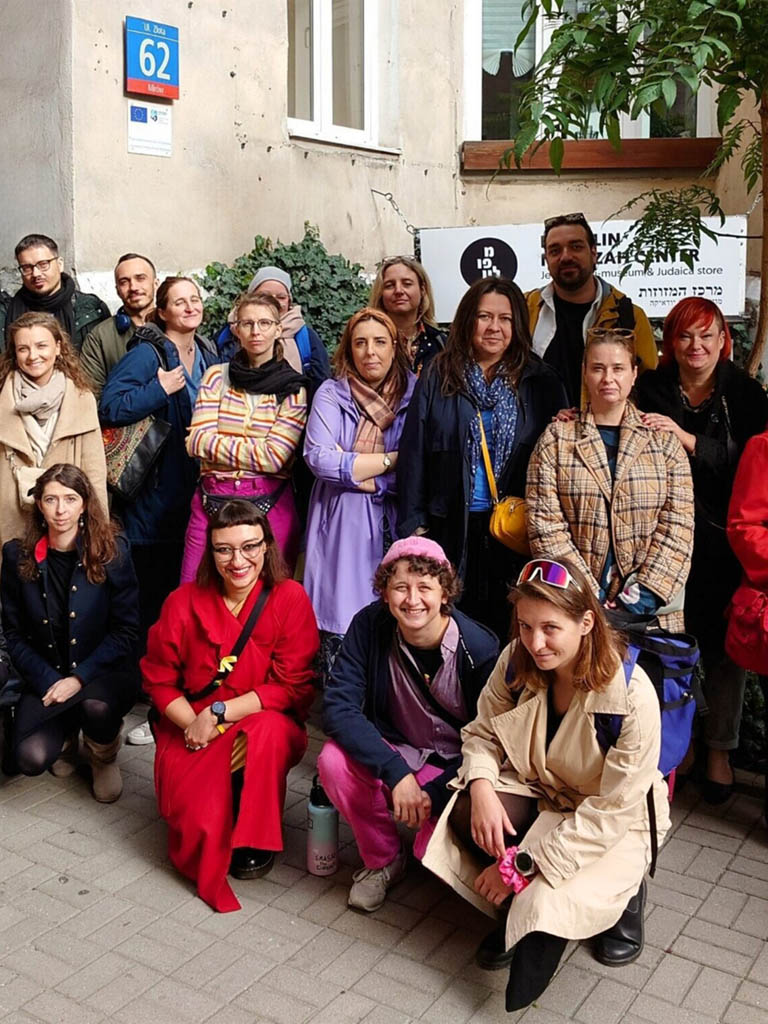
MI POLIN MEZUZAH CENTER
Located near the historic Warsaw Ghetto Wall, the Mezuzah Museum invites you to explore Jewish history and traditions in a meaningful way – throught mezuzah traces. Our exhibitions and collections focus on the mezuzah and its profound symbolism. Museum all about mezuzah and mezuzah traces by Aleksander Prugar and Helena Czernek. A must see place. Small but richly documented.
Address: 62 Złota St. Warsaw
+48 502 043 935 contact@mipolin.pl
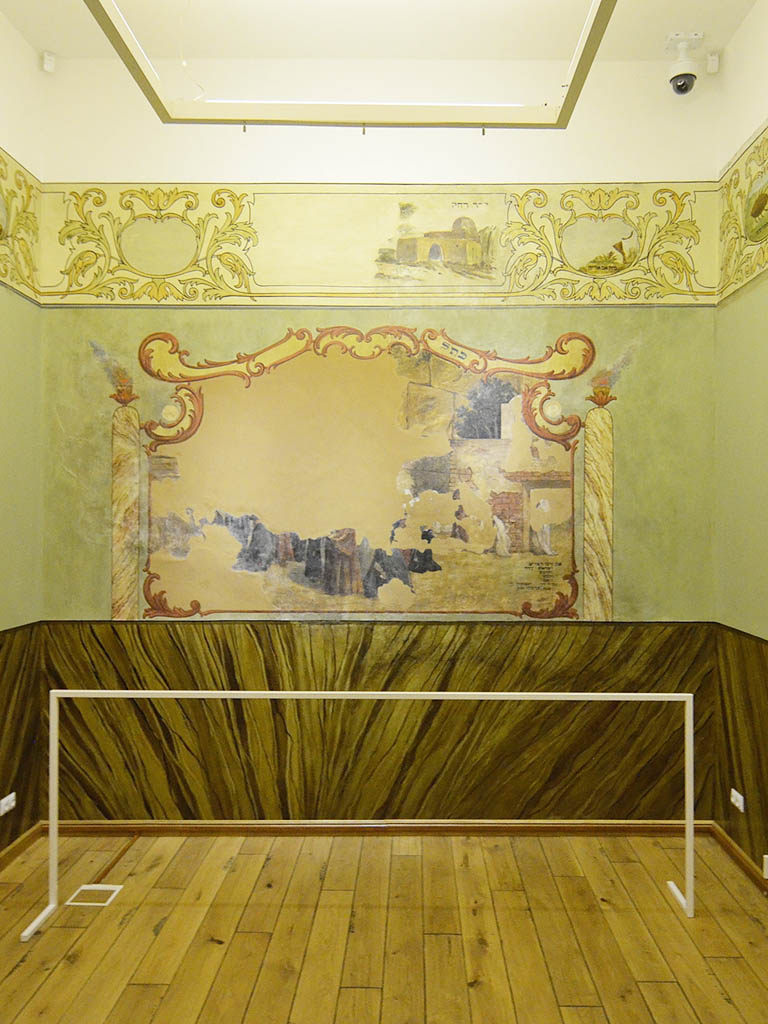
THE PRAGA MUSEUM OF WARSAW
The Museum of Warsaw’s Praga District is the first museum on the right bank of the Vistula River, located in one of the oldest surviving residential buildings in the Praga District, featuring a unique complex of Jewish prayer rooms (with preserved polychrome decorations), in the immediate vicinity of the Różycki Market (Warsaw’s oldest operating market).
Address: Targowa 50/52 St. Warsaw
Contact: (+ 48) 22 518 34 30
ŻABIŃSKI VILLA AT THE WARSAW ZOO
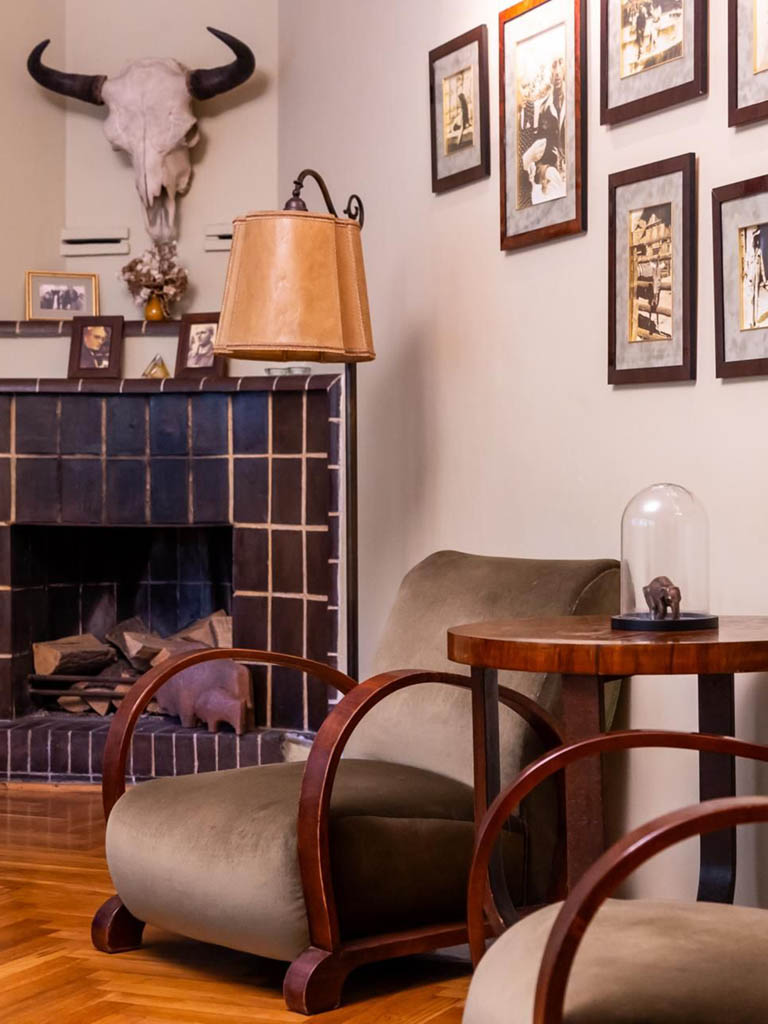
During the German occupation, the Warsaw Zoo, led by director Jan Żabiński, became a hiding place for many Jews. Nearly 300 Jews found refuge during the Holocaust in the Żabińskis’ modernist villa, known as the “House Under the Crazy Star,” located on the zoo grounds. The Żabiński villa can be visited only with a guide, by prior telephone appointment.
Address: ul. Ratuszowa 1/3 03-461 Warsaw
Contact: 603 059 758
JCC WARSAW
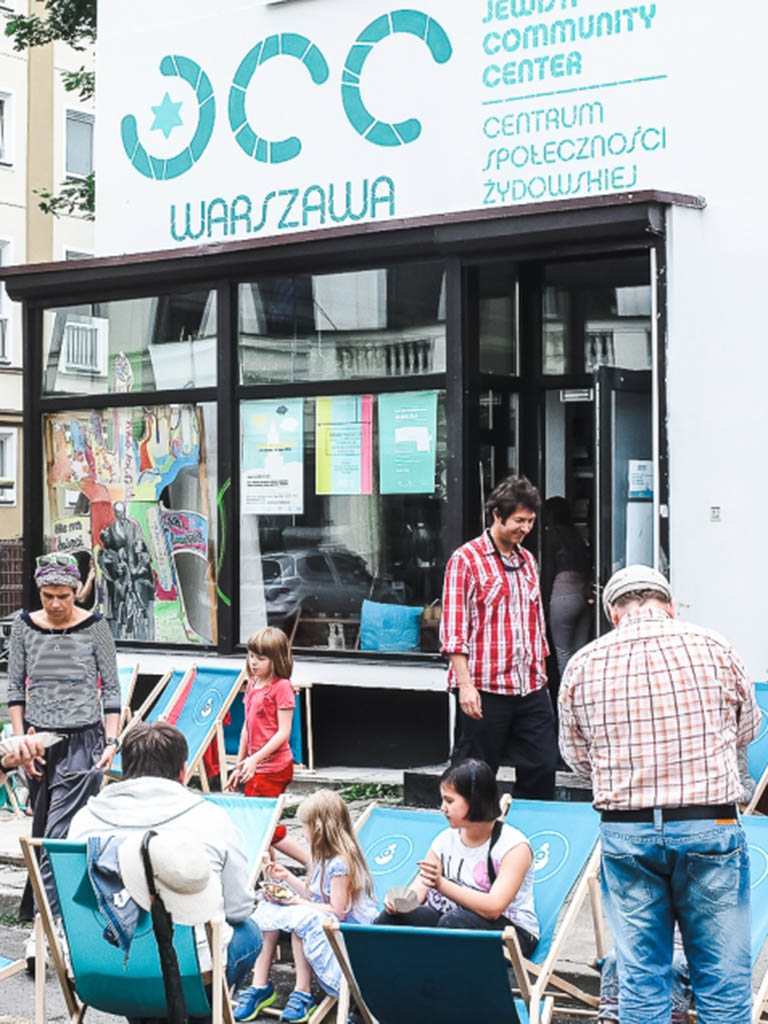
JCC Warsaw is a welcoming communal home that brings together Jews of all backgrounds for meaningful Jewish experiences, learning, and connection. We foster diverse Jewish identities, nurture joy, support exploration, and strengthen the sense of community and belonging in Warsaw. Core program: Hajnt – (Yiddish for “today”) – discussions on topics important to the Jewish community.
Address: ul. Chmielna 9A 00-021 Warsaw
Contact: biuro@jccwarszawa.pl
We reccomend: Boker Tov (Sundays)
THE GHETTO WALL AT 62 ZŁOTA ST.
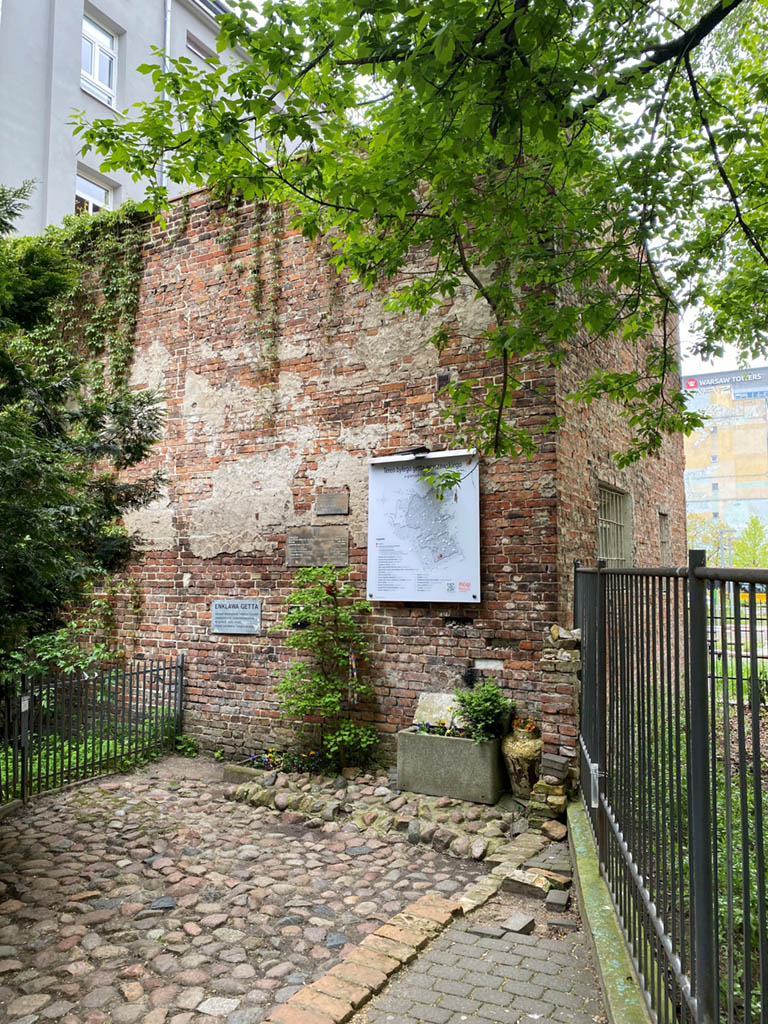
The ghetto wall is a section of a pre-war building’s wall approximately 6 meters high. This is the only place in Warsaw where you can see the Ghetto Wall up close. To see the wall, enter the courtyard at Złota 62 and then turn right. Access to the wall is from the courtyard of the tenement house at 62 Złota Street. Access is available from 8:00 a.m. to 7:00 p.m on a daily basis (work days and weekends)
Address: Złota 62, then turn right at the end of the backyard. Warsaw
01–821 Warszawa
THE GHETTO WALL AND THE TENEMENT AT 14 WALICÓW ST.
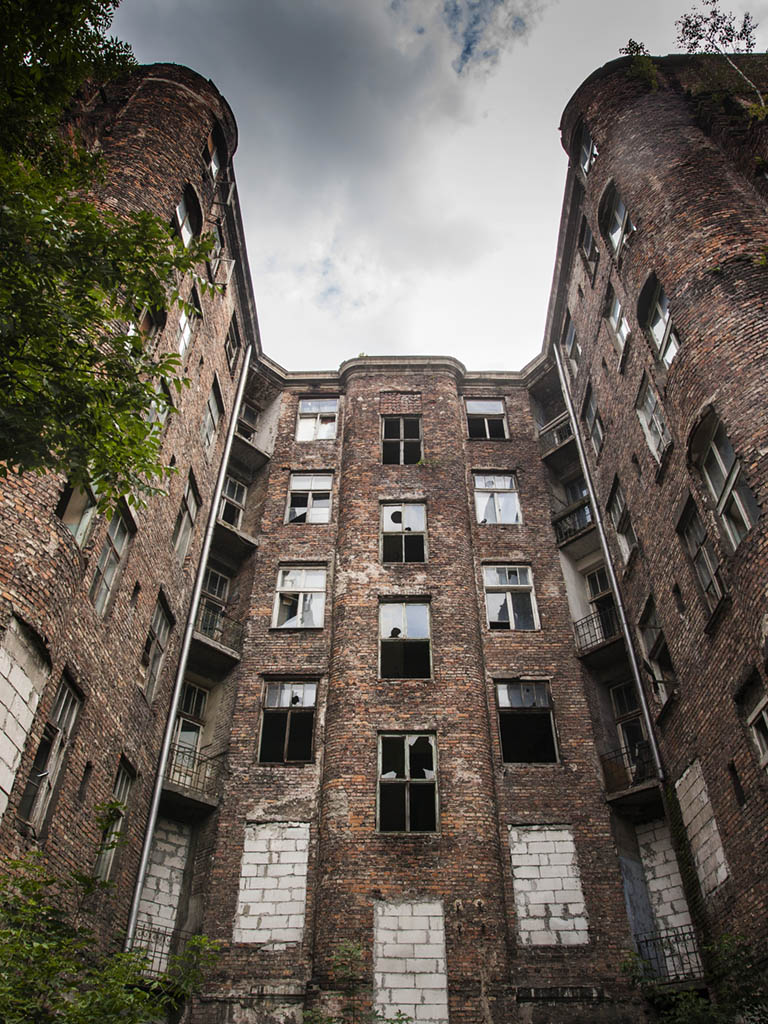
The surviving wall of the building that once belonged to Herman Jung’s brewery marked the boundary of the ghetto from November 1940 to August 1942 – Waliców 11. Across the street stands an abandoned tenement house—now a historic monument—whose facade was destroyed during the war. Its most famous resident was the poet Władysław Szlengel – Waliców 14.
Address: 11 Waliców St. and 14 Waliców St. Warsaw
THE FOOTBRIDGE OF REMEMBRANCE
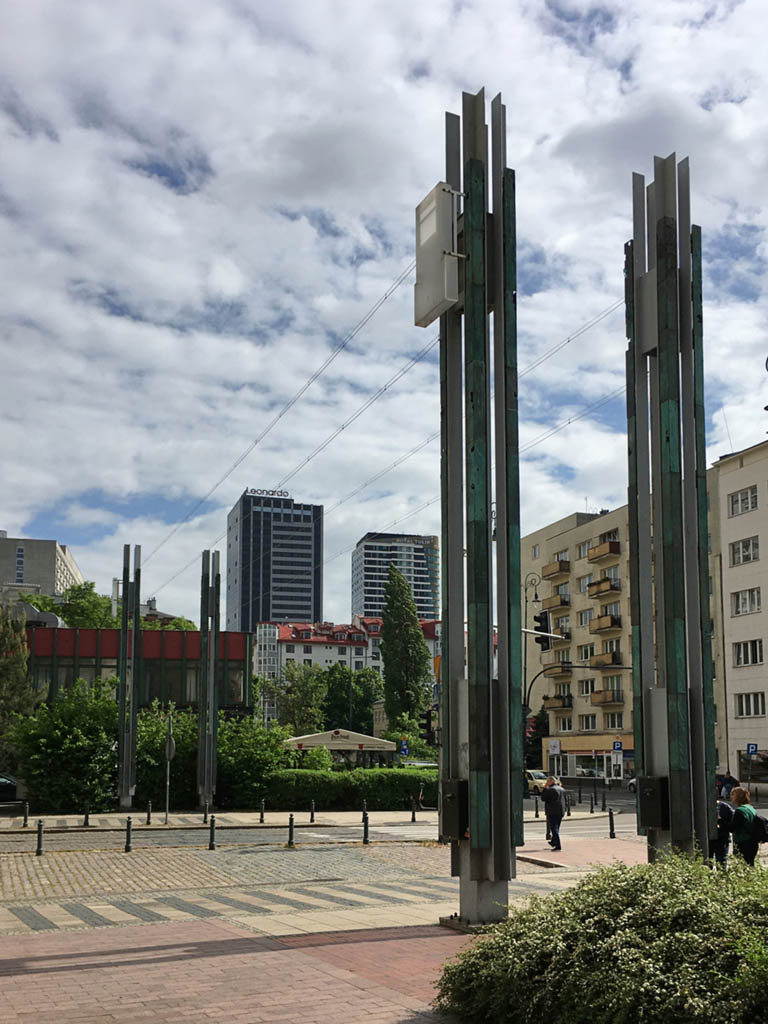
A monument in the form of an art installation located on Chłodna St. at the intersection with Żelazna St. in Warsaw. It commemorates the wooden bridge that stood at this site in the Warsaw Ghetto in 1942. Four stereoscopes were installed on two poles on the north side of Chłodna Street; The installation was launched on October 1, 2011. It is the third memorial at the intersection commemorating the wooden bridge from 1942.
Address: Corner Chłodna St. and Żelazna St Warsaw
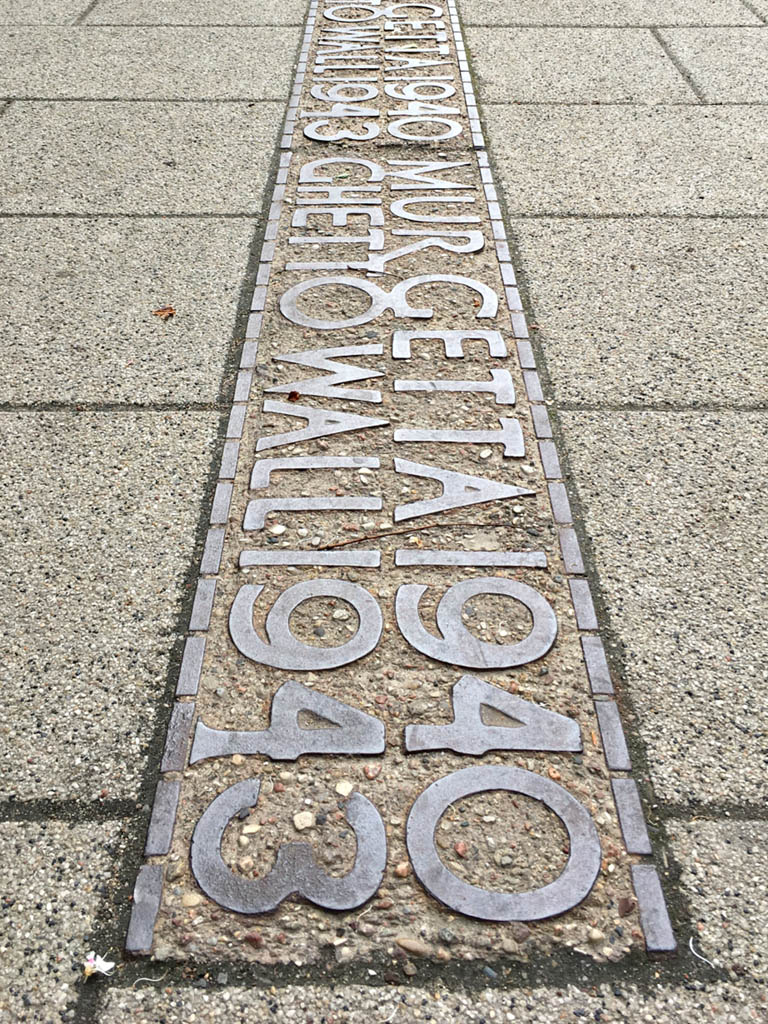
MONUMENTS MARKING THE BORDERS OF THE WARSAW GHETTO
A series of 22 commemorative plaques and sidewalk tiles marking the route of the Warsaw Ghetto walls in Wola and Śródmieście. These monuments commemorate, within the urban landscape of modern-day Warsaw, the outermost points of the Jewish ghetto’s boundaries. The project was developed by Eleonora Bergman and Tomasz Lec and Jan Jagielski from Jewish Historical Institute in Warsaw
Best Address: 52 Twarda St. Warsaw
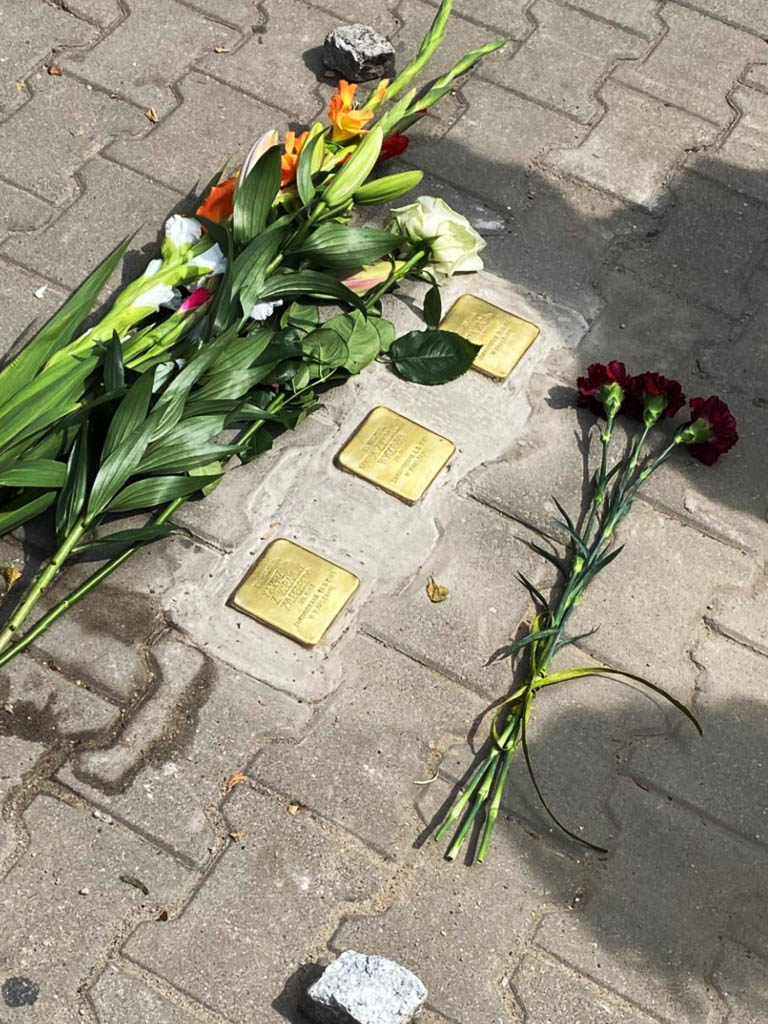
STOLPERSTEINE – MEMORIAL STONES
Stolpersteine are small paving stones topped with a brass plaque bearing the first name, last name, date of birth, and place of death of the person being commemorated, a victim of the Holocaust. The stones are installed in the sidewalk near the person’s last known place of residence. Stolpersteine were created by the German artist Gunter Demnig.
Best Address: 62 Złota St. Warsaw
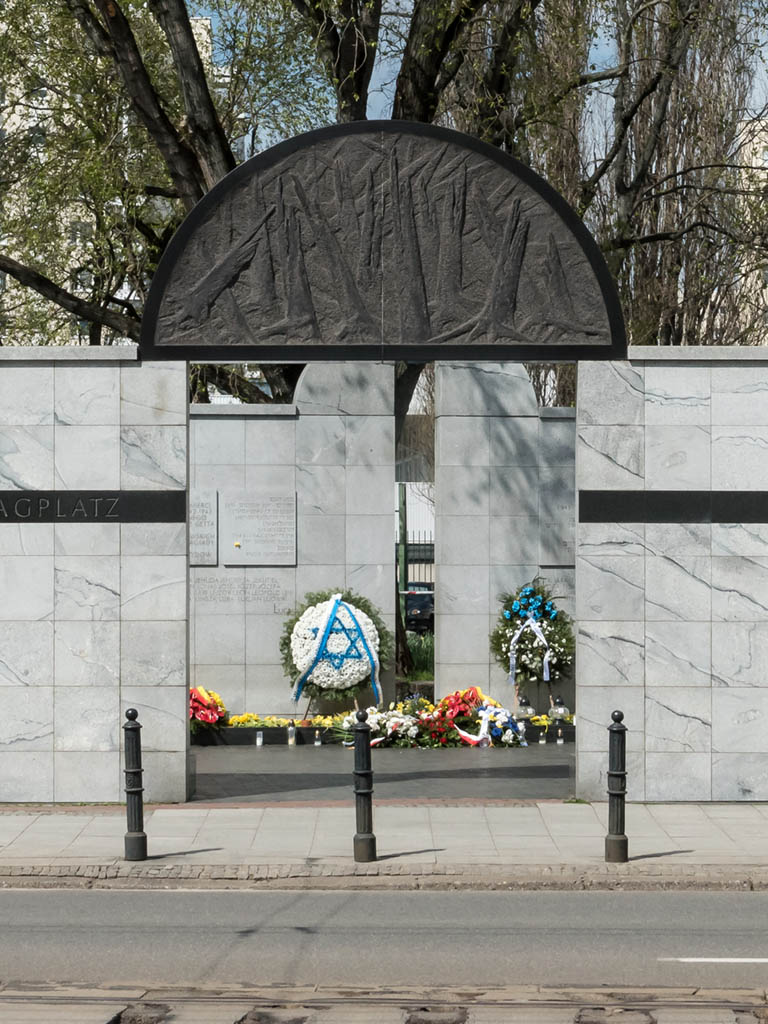
UMSCHLAGPLATZ
A monument commemorating the deportation of over 300,000 Jews from the Warsaw Ghetto to the Treblinka extermination camp. Monument was designed by Hanna Szmalenberg and Władysław Klamerus. Umschlagplatz was the term used during The Holocaust to denote the holding areas adjacent to railway stations where Jews were assembled for deportation to death camps.
Address: 10 Stawki St. Warsaw
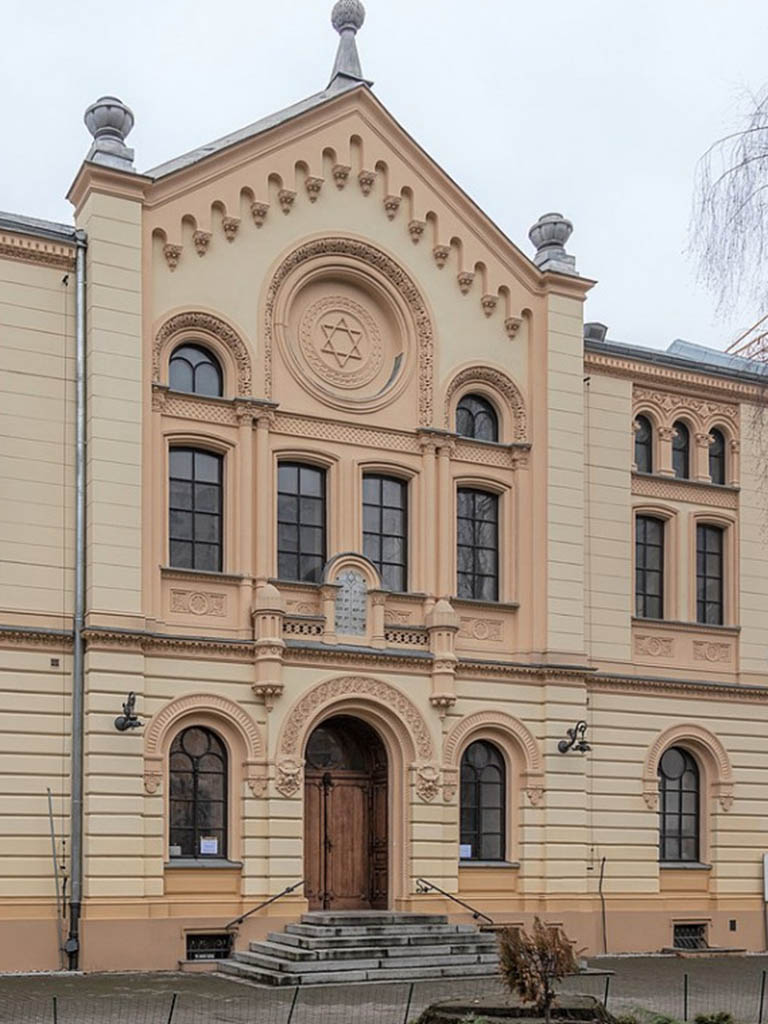
THE NOŻYK SYNAGOGUE AND PRÓŻNA ST.
The Nożyk Synagogue is the only one in Warsaw that survived World War II without major damage and remains in use to this day. It was built thanks to the Warsaw merchant Zalman Nożyk and his wife Rywka, who lived on nearby Próżna Street. Próżna Street is the only street within the Warsaw Ghetto that survived intact and was not destroyed during the war.
Address: 6 Twarda St. Warsaw
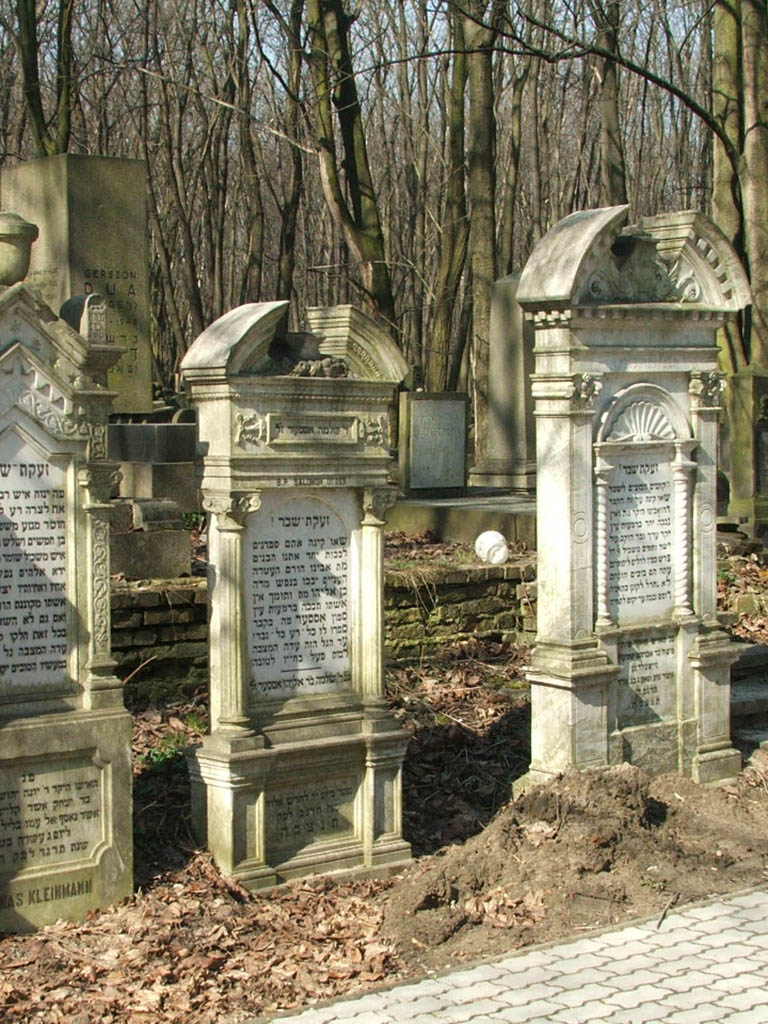
JEWISH CEMETERY OKOPOWA STREET
It covers an area of approximately 33.4 ha. It is estimated that about 200,000 people are buried there. It is the only Jewish cemetery in Warsaw where burials still take place.
Address: 49/51 Okopowa, Warsaw
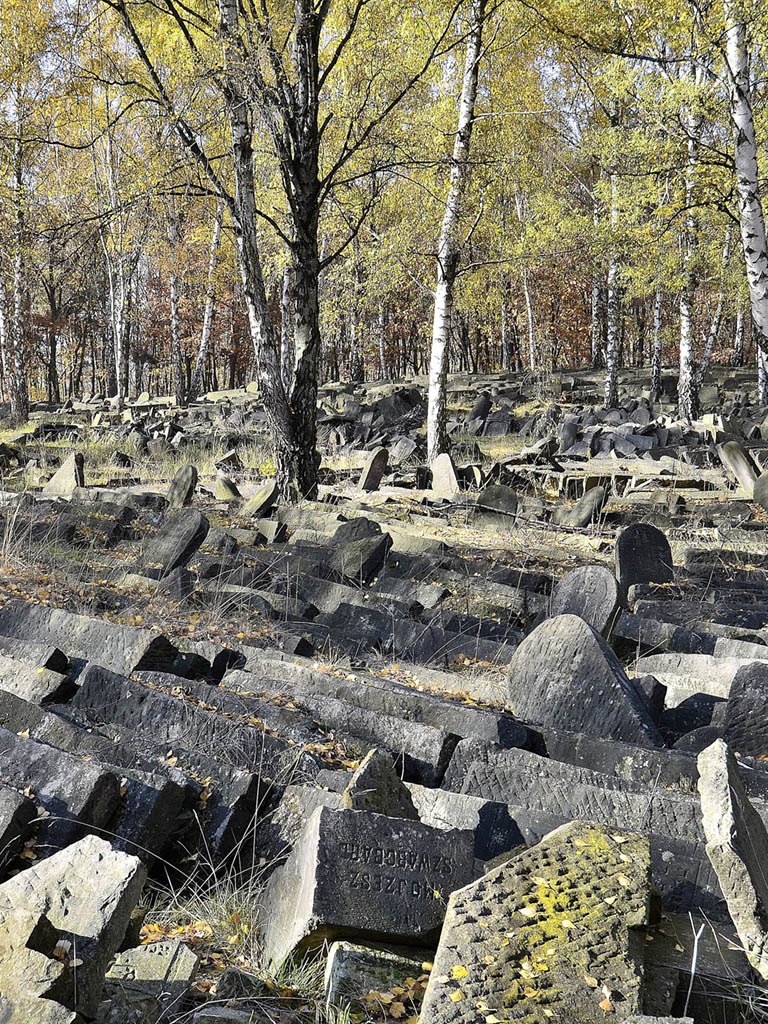
BRÓDNO JEWISH CEMETERY
The oldest existing Jewish cemetery in Warsaw. The largest Jewish cemetery in Poland. Between 1743 and 1940, approximately 250,000 people were buried here.
Address: 15 Św. Wincentego 15, Warsaw
TAUBE CENTER
The Taube Center for Jewish Life & Learning is dedicated to enriching Jewish life in Poland and to connecting Jews with their East European heritage through heritage tours.
Address: 6 Twarda St. Warsaw
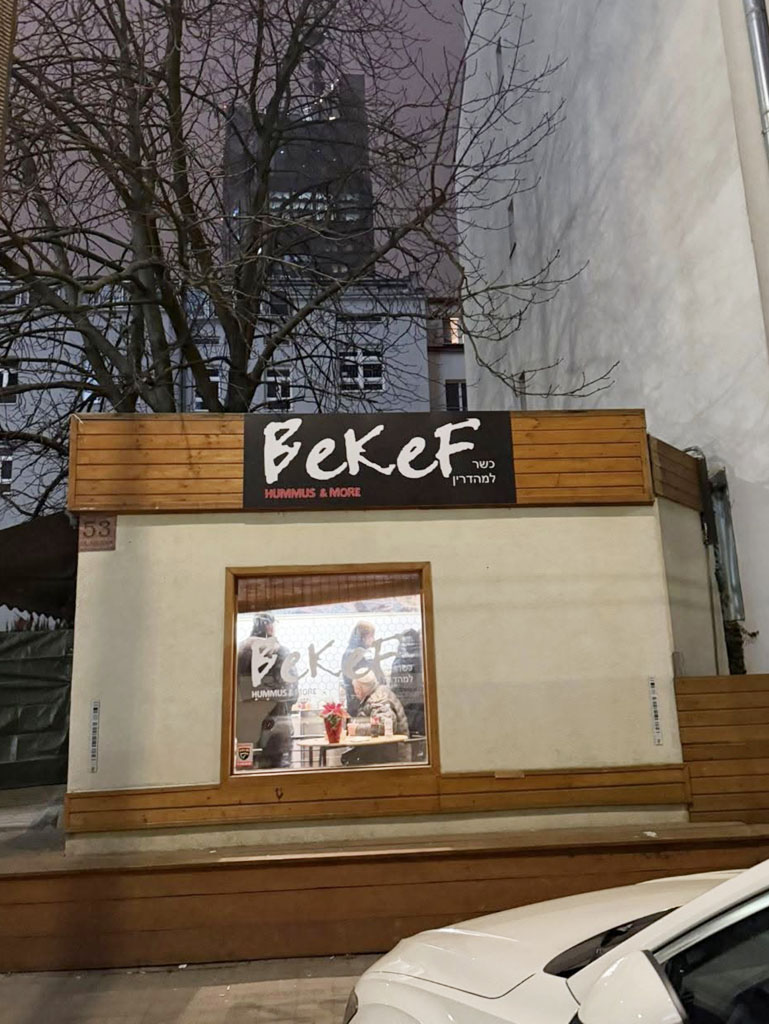
BEKEF
Kosher Israeli humus
Address: 53 Sienna 53 corner with Al. Jana Pawła II 11 1
100% kosher food made in Poland
MUSEUM OF THE HISTORY OF POLISH JEWS POLIN
The biggest museum presenting the 1000 years of Jewish history in Poland. Must see!
We reccomend: Temporary exhibitions, permanent exhibition, restaurant.
Address: 6 Anielewicza St. Warsaw